
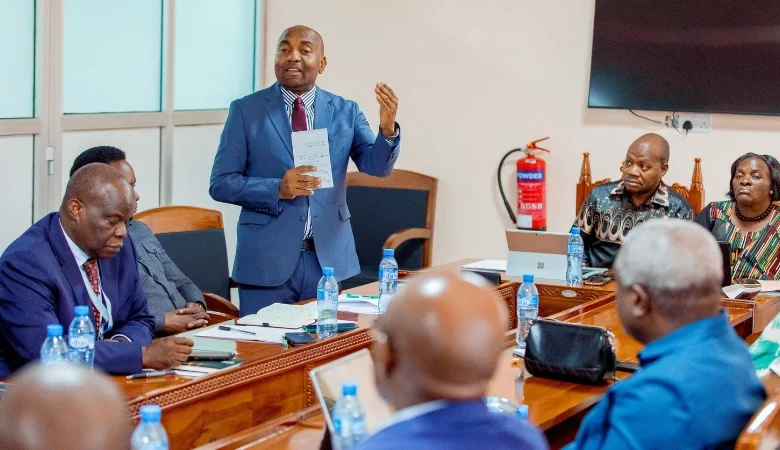
DODOMA, Jan 20 (NNN-DAILYNEWS) — MINISTER of State in the Vice-President’s Office (Environment and Union Affairs), Engineer Hamad Yussuf Masauni has revealed that a total of 82 carbon trading projects have so far been registered in the country, with four already at the stage of full implementation.
He said the projects are expected to generate revenue for the country and contribute to improving the welfare of citizens.
Masauni made the remarks in Dodoma while presenting a report on the structure and responsibilities of the National Carbon Coordination Centre (NCMC) to the Parliamentary Standing Committee on Water and Environment, chaired by Jackson Kiswaga.
He noted that carbon trading projects are currently being implemented in several local government authorities, including the district councils of Tanganyika, Kiteto, Karagwe, Uvinza and Mbulu.
Carbon trading is an economic mechanism that allows the buying and selling of carbon credits, with the primary aim of reducing greenhouse gas emissions.
A carbon project refers to any initiative designed to generate internationally recognised carbon credits.
Among the key benefits of carbon trading are the mitigation of climate change impacts, environmental conservation and the strengthening of the economy, social welfare, policy frameworks, technology and innovation.
Masauni added that the implementation of carbon trading projects has already yielded tangible development benefits, including the restoration of natural vegetation, construction of social service infrastructure and efforts to reduce carbon emissions.
“The centre is responsible for registering carbon projects, as well as verifying and validating carbon credits and other greenhouse gases. This is done through the development of scientific guidelines that support management systems, policy direction and capacity building in technical aspects of the Measurement, Reporting and Verification (MRV) system,” he said.
He explained that the establishment of a carbon project involves several steps, including submission of a project concept note, preparation and submission of a preliminary project document, development and submission of a full project document in line with international standards, approval by the relevant authority and commencement of project activities within two years after receiving an approval letter from the minister responsible for environmental affairs.
Carbon projects can be developed in various sectors, including energy, transport, forestry, waste management, industry and product use, the blue economy and agriculture.
Examples include forest conservation, tree planting, use of clean energy, adoption of environmentally friendly technologies and sustainable transport systems.
The NCMC has multiple responsibilities, including coordinating matters related to carbon trading and greenhouse gas management, as well as monitoring and reporting on trends in greenhouse gas emissions and carbon trading activities in the country. — NNN-DAILYNEWS