
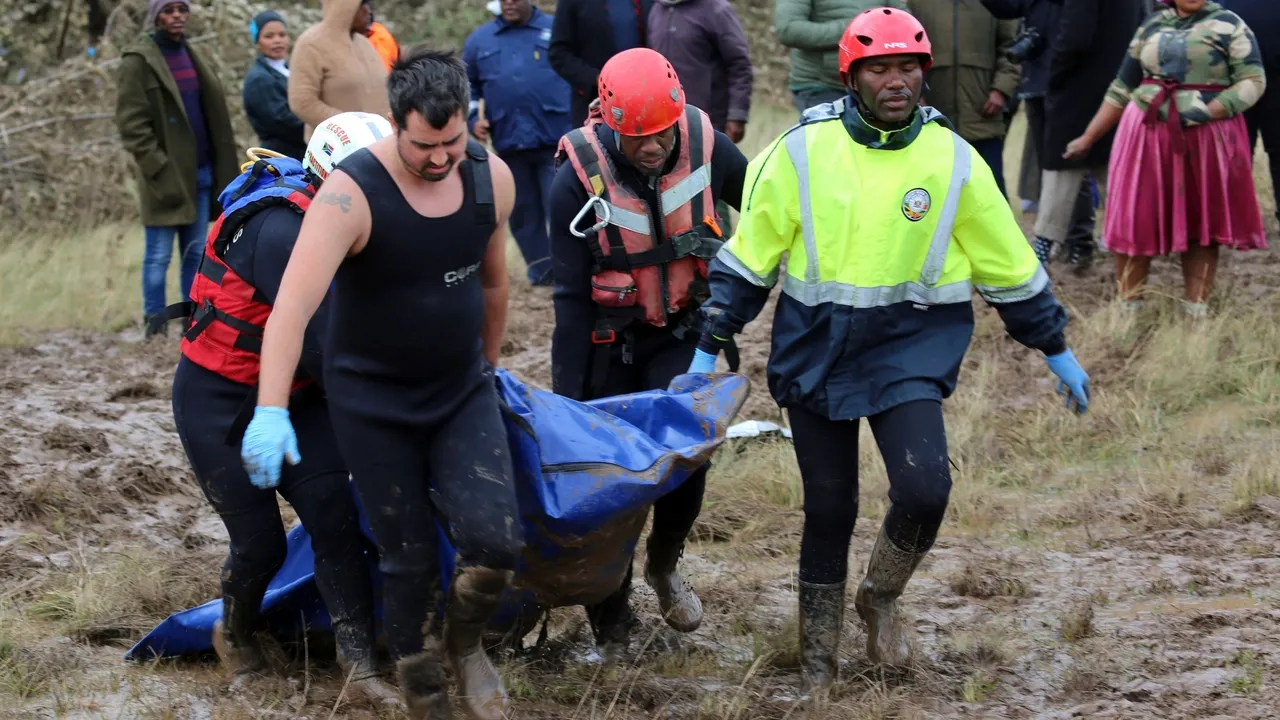
PRETORIA, Jan 16 (NNN-AFRICANEWS) — Flooding triggered by torrential rains in northeastern South Africa claimed at least 10 lives overnight and forced the closure of the iconic Kruger National Park, officials said.
The weather service issued the maximum warning for more rain in parts of the country while neighbouring Mozambique was also on alert after flooding that inundated roads and homes.
Nine people died in a village in South Africa’s Limpopo province near Kruger, a provincial spokesperson said.
Nearly 200 people have been rescued, he said.
Images released by South Africa’s National Defence Force showed a military helicopter airlifting stranded residents from trees.
In neighbouring Mpumalanga province, rescuers on Thursday recovered the body of a woman who drowned while trying to cross a river.
At least 19 people have died in Mpumalanga since the rains began in November, provincial spokesperson Freddy Ngobe said.
“As at now, the rains are pouring, they do cool off for a few hours or so, but the rivers are overflowing,” he said, warning that low‑lying areas remained at risk as major dams had reached full capacity.
President Cyril Ramaphosa visited Limpopo on Thursday “to assess the extent of the damage and the response of government,” his office said.
The Kruger National Park, a premier destination for wildlife tourism, had to evacuate six bush camps and some tented camps, the park’s communications director, Rey Thakuli, said.
Day‑visitor access to the park was suspended Thursday.
In Mozambique, authorities began evacuating residents from low‑lying areas because of the high water levels, with reports of an unspecified loss of life.
Mozambique’s meteorology department said more heavy rains accompanied by thunderstorms and gusty winds were expected in the coming days, including in the capital Maputo.
While the southern hemisphere summer typically brings seasonal rains, this year’s extremes have unfolded against a backdrop of deepening climate stress with downpours in northeastern South Africa and dry conditions and wildfires further south.
“Our summer of extremes is but a small foretaste of the climate impacts that could follow if we do not act now,” James Reeler, senior climate specialist at WWF South Africa, said in a statement. — NNN-AFRICANEWS