
 |
DAR ES SALAAM, Dec 6 (NNN-AGENCIES) — Western missions, the United States, the United Nations (UN), and the European Union (EU) are formally demanding government action over the crisis stemming from the election-related protests in Tanzania.
In a joint statement on Friday, the British and Canadian high commissions and embassies of Norway, Switzerland, Belgium, Denmark, Finland, France, Germany, Ireland, Italy, the Netherlands, Poland, Slovakia, Spain and Sweden echoed growing global calls for a proper and transparent investigation into the deadly election-related events, including reports of state-instigated civilian killings and concealment of dead bodies.
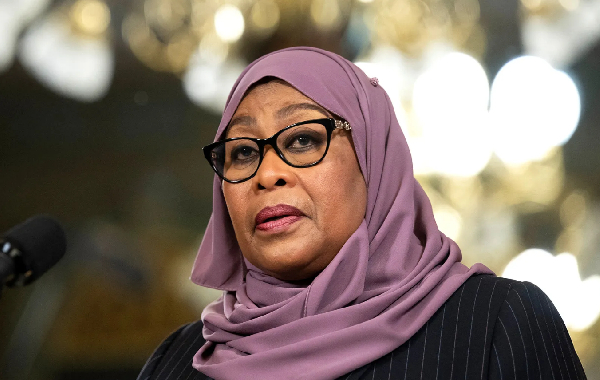
They urged President Samia Suluhu Hassan’s administration to address recommendations by election observers from the African Union and Southern African Development Community (SADC), which they said set out “clear shortcomings” in Tanzania’s electoral process.
The joint message came on the heels of back-to-back statements from the US and UN, which underscored the serious nature of Tanzania’s current political crisis caused by a poorly handled election and the challenges that the Samia administration needs to overcome to regain international confidence.
It also followed an EU Parliament resolution on November 29 pushing for a complete EU aid cut to Tanzania due to concerns about repression, democratic backsliding, and human-rights violations arising from the election, potentially blocking a €156 million ($181.82 million) funding package for 2025, which was approved in October.
The resolution requires final endorsement by the EU Council and the EU Commission before implementation.
And on Thursday, the US Department of State said that it was “comprehensively” reviewing its bilateral relationship with Tanzania in the wake of government actions that have raised “grave concerns” about the direction of the relationship and “the reliability of the Tanzanian government as a partner.”
The actions it referred to included “ongoing repression of religious freedom and free speech, the presence of persistent obstacles to US investment, and disturbing violence against civilians in the days leading up to and following the October 29 elections.”
“These actions have put American citizens, tourists, and US interests in Tanzania at risk, and threatened to undermine the mutual prosperity and security that have defined our partnership for decades,” said Thomas Pigott, the department’s principal deputy spokesperson.
“The United States cannot overlook actions that jeopardise the safety of our citizens, or the security and stability of the region. The future of our bilateral relationship with the government of Tanzania will be based on its actions.”
Observers have noted that the US statement appeared intentionally timed to coincide with President Donald Trump’s meeting with leaders from African countries to witness the signing of a fresh peace deal between Rwanda and the Democratic Republic of Congo in Washington, DC, on Thursday, from which Tanzania was conspicuously excluded. Tanzanian officials did not immediately respond to the latest pressure from abroad.
_The EastAfrican’s_ phone calls and text messages to Foreign Affairs minister Mahmoud Thabit Kombo went unanswered. But President Samia, earlier in the week, railed against external attempts to “undermine” both her government and Tanzania’s sovereignty, citing these attempts as major factors behind the election chaos caused by youth-driven protests and a lethal response from state security forces, which led to thousands of deaths, including those of innocent civilians.
Without citing any specific countries, groups, or individuals, she accused internal and external influencers — including Tanzanians in the diaspora — of instigating the protests in a bid to topple her government.
She defended the use of deadly force to quell the demonstrations, asserting that “the measures applied fit the circumstances.”
In the midst of the unprecedented election-related crisis, Samia—seeking to cement her incumbency through the ballot box after inheriting the presidency from the late John Magufuli in 2021—was declared to have won 98 percent of the vote, and the ruling Chama Cha Mapinduzi (CCM) party swept up at least 90 percent of seats in the National Assembly.
But the election’s credibility has been widely questioned in the wake of the government’s reluctance to release official casualty figures from the widespread violence.
To further compound another uncomfortable week for President Samia, a group of UN special rapporteurs on human rights also released a report on Thursday condemning “reported widespread and systematic human rights violations in Tanzania” following the election and calling for a “prompt, impartial, independent, thorough, and effective investigation into all reported killings, enforced disappearances, and other human rights violations.”
According to the UN experts, reports indicated that security officers were given orders to “shoot to kill” during the crackdown, which was conducted under the cover of a nationwide internet shutdown that “severely curtailed efforts to document (violations), further compounding the crisis.”
They noted that the number of people killed in the aftermath of the election was estimated to be at least 700, with other estimates pointing to thousands of potential victims.
Many of the victims’ bodies were reported to have disappeared from morgues, amid allegations that human remains were “incinerated or buried in unidentified mass graves.”
“Family members who identified remains were reportedly forced to sign false statements about the cause of death to receive the bodies,” the report said.
While also noting that the government had established an official commission of inquiry to look into the causes of the protests and human-rights violations, the UN rapporteurs urged the commission to be”independent and make proposals to ensure accountability, justice and reparation, including guarantees of non-recurrence, and full participation of victims and civil society organisations.”
They also referenced threats of a fresh round of planned public demonstrations on December 9, Tanzania’s Independence Day, calling on authorities and security forces to prevent further “violations” and protect people’s right to peaceful assembly. — NNN-AGENCIES